 U is for Urad Beans
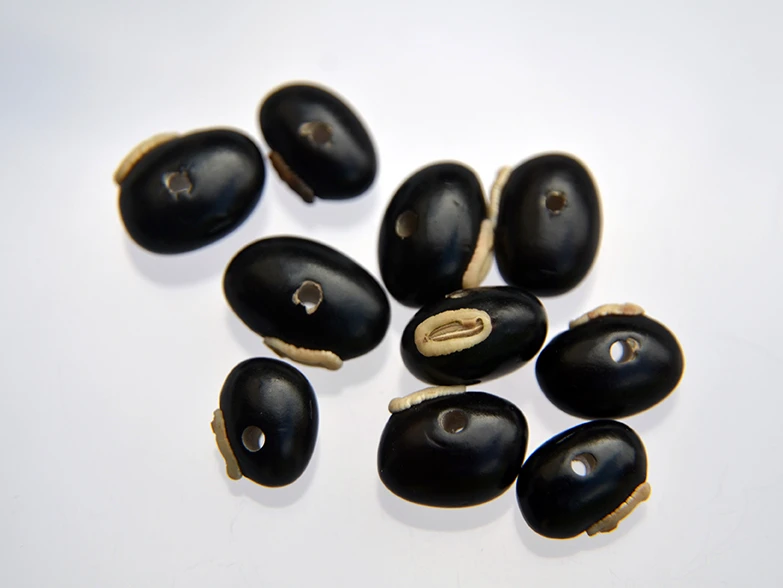
As we enter the difficult letters of the alphabet, nick names play an important role in the veggies I chose. Today's choice is a pulse (lentils, chick peas and beans) with many names including black lentils, Vigna Mungo and black gram. It is not a true lentil but the distinction isn't all that clear.
History: This legume originated in India and has been cultivated since ancient times. It is a prized crop and has been spread throughout tropical areas by Indian settlers. It is interesting to note that medieval crucibles were made of earthen ingredients and different plant based items were added to determine enhanced property opportunities. Ground Urad beans were found to make the ceramic crucibles impermeable to moisture. It was also used in construction as a cementing agent.
Identification: To be considered the Urad bean, the beans are whole. When they are split, they fall into the lentil identification. The beans are black and can have a white spot on them. They grow in long pods but are husked and found in the markets as loose beans. This pulse, like most, are high in protein, potassium, calcium, iron,
niacin, Thiamine, and riboflavin. A great choice for people suffering with diabetics as it evens out blood sugars. Season: As a dried bean, it can be found year round.
Recipe: Dal is an essential dish in Indian cuisine. Because I really love promoting local businesses and especially when I know the owner, I am sharing a blog post by Anupy Singla. Her recipe is for split red lentils, but you may substitute Urad beans. Please read the blog and learn about Dal and cooking pulses. Discovering Indian cuisine opens a wonderful world of new flavors.
Click here for INDIAN AS APPLE PIE



Comments